

CONDENSATION: Always open vents when showering or cooking to prevent moisture buildup, which can lead to mold and mildew. Even in cold weather, crack a vent slightly and use a vent fan if possible. Vent covers help keep airflow steady even during rain or snow.
Maintain Interior Safety: Keep fire extinguishers, smoke detectors, and carbon monoxide detectors in working condition. Regularly test them and have a first aid kit that is easily accessible.
Don’t overload electrical circuits: Be mindful of your camper’s amp rating (30A or 50A) and avoid exceeding it. Turn off unnecessary devices when not in use. – What does this mean? (example) If you are running the microwave and a hair dryer at the same time that will overload the system, and you will likely blow a fuse.
Optimize Refrigerator Efficiency: Level your camper to make sure the refrigerator works efficiently. Leave space around items inside for proper airflow and if necessary, use a small batter operated fan to circulate air.
Keep refrigerator vents clear: Inspect the exterior vents of your RV fridge regularly to ensure they are free from dirt, debris, or obstructions.
Safeguard against propane leaks: Check propane tanks and connections regularly for leaks using a soapy water solution. Pour soapy water over the hoses and connections and if you see bubbles, you may have a leak. Change and replace hoses and connections as necessary.
Inspect and protect the roof: Regularly check the roof for cracks, leaks, or damage, especially around seams and vents. Apply an RV-specific self-leveling lap sealant to repair any issues and consider using a protective roof coating to extend its life.
Prevent roof overloads: Avoid placing heavy objects on the roof as it could damage the structure or create leaks. Use the roof only for its intended purposes, such as maintaining rooftop accessory or safely clearing snow or debris.
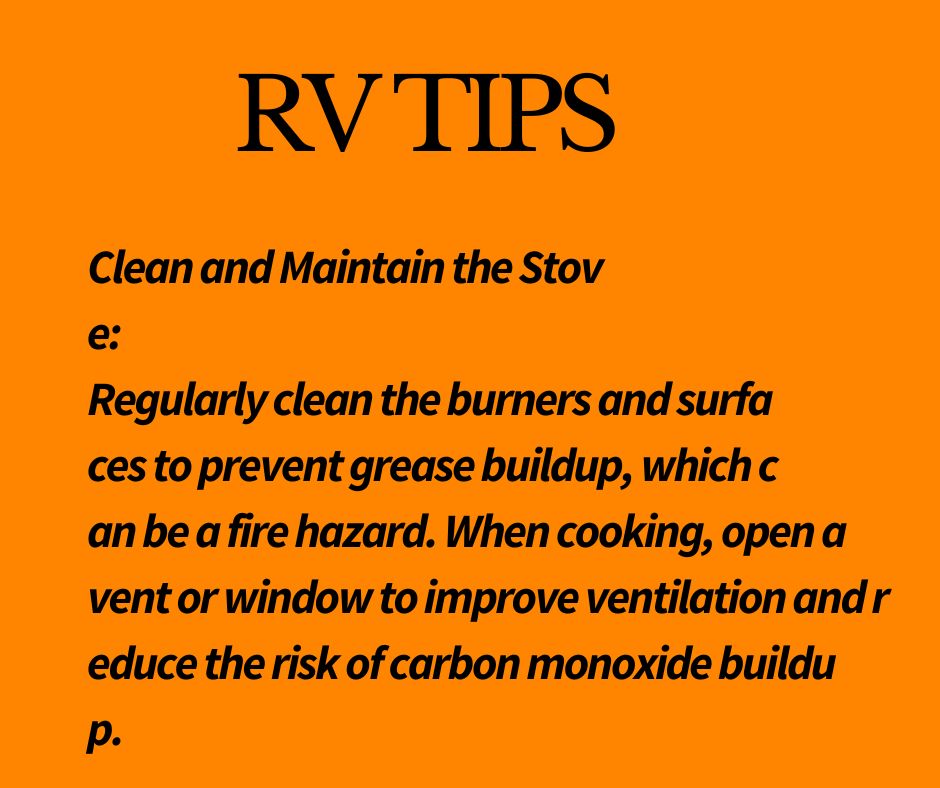
Clean and maintain the stove: Regularly clean the burners and surfaces to prevent grease buildup which can be a fire hazard. When cooking, open a vent or window to improve ventilation and reduce the risk of condensation and carbon monoxide build up.
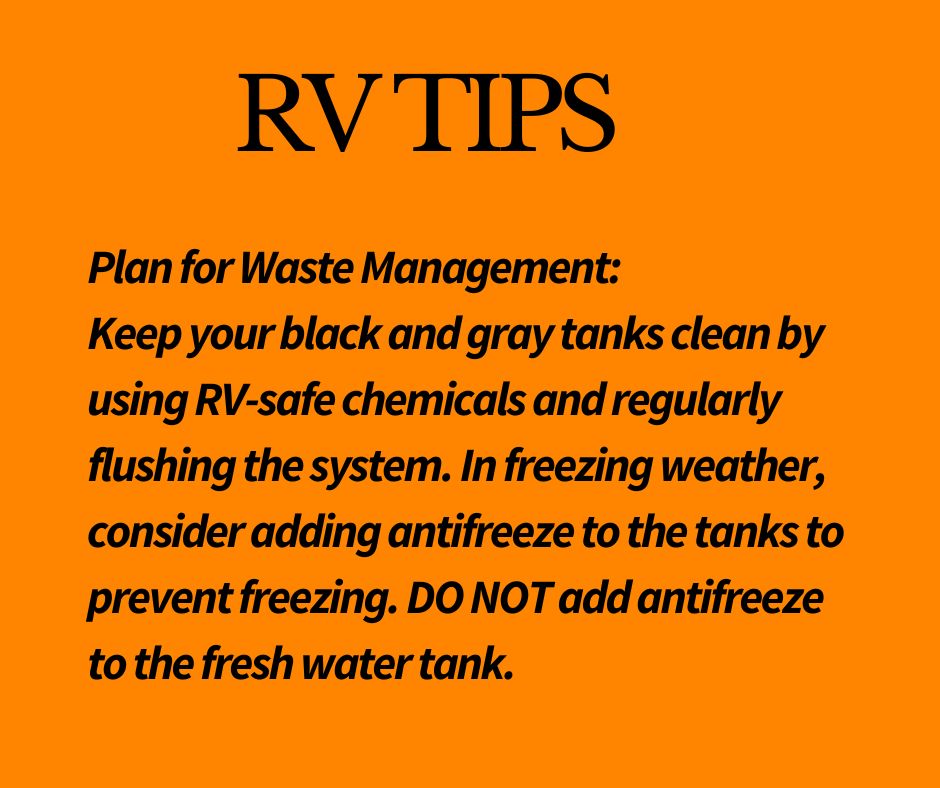
Plan for waste management Keep your black and gray tanks clean by using either RV-safe chemicals or Dawn dish detergent and regularly flushing the system. In freezing weather consider adding antifreeze to the tanks to prevent freezing. DO NOT add antifreeze to the fresh water tank.

Protect the exterior water system: Use a heated water hose or wrap a standard hose with heat tape. Insulate outdoor water spigots and connections with foam covers or insulation to prevent freezing in colder climates.
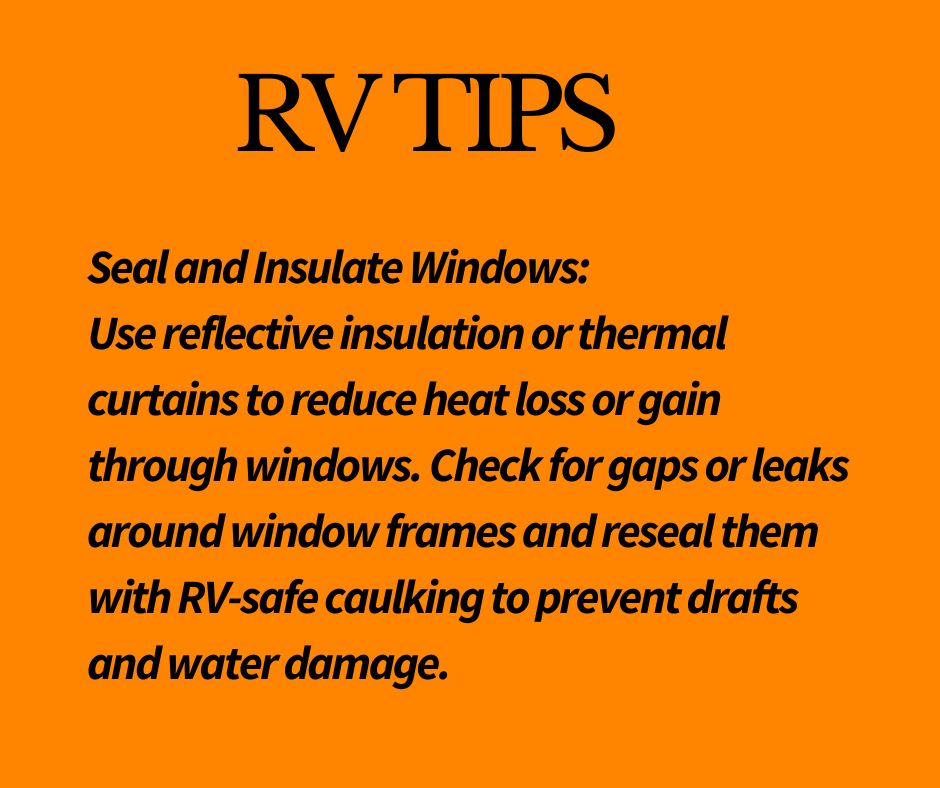
Seal and insulate windows: Use reflective insulation or thermal curtains to reduce heat loss or gain through windows. Check for gaps or leaks around window frames and reseal them with RV-Safe caulking to prevent drafts and water damage.